We Tried Goop's Wellness Protocols for 30 Days. Here's What Actually Happened

I want to be upfront: I went into this skeptical. Goop — with its prices, its occasional pseudoscience, and its very particular aesthetic — has always occupied a complicated place in my mind. I think it is simultaneously worth taking seriously and worth questioning rigorously, which is exactly the spirit in which I tried their current lineup of protocols for thirty days.
What I Actually Tried
The current Goop wellness framework centers on a few pillars: their supplement line, a morning movement practice, an emphasis on organic whole foods and seed cycling for hormonal support, and their skin protocol. I committed to all of it for thirty days, bought what I needed to buy, and kept notes.
The Things That Genuinely Worked
The magnesium supplement
I was sleeping better by week two. Genuinely, noticeably better. Magnesium glycinate is not a Goop invention — it's widely available and well-researched for sleep support — but I had never been consistent enough with it to feel the effects. Their formula is good. You could also buy magnesium glycinate anywhere for a fraction of the price.
The seed cycling practice
This one I had written off entirely. The data here is modest, but by week three my premenstrual symptoms were noticeably milder than usual. I kept doing it.
The movement protocol
Thirty minutes, five days a week, of intentional movement combining flexibility and strength work. By the end of thirty days I felt more at home in my body than I had in years. No caveats here.
The Things That Were Mostly Marketing
The $98 vitamin C serum performed identically to a $28 alternative. The detox powder made me feel no different than drinking a green smoothie I made myself. And the idea that you need a specialized protocol for hydration — just drink water — is the kind of thing that should make you suspicious of any wellness brand.
"The most valuable thing Goop sells isn't any product. It's the permission to take your own health seriously. That part, you can have for free."
Thirty days in, I feel better. The lesson: read everything Goop puts out, take the ideas seriously, replicate what you can with less expensive alternatives, and spend the money you save on a really good reformer Pilates class.
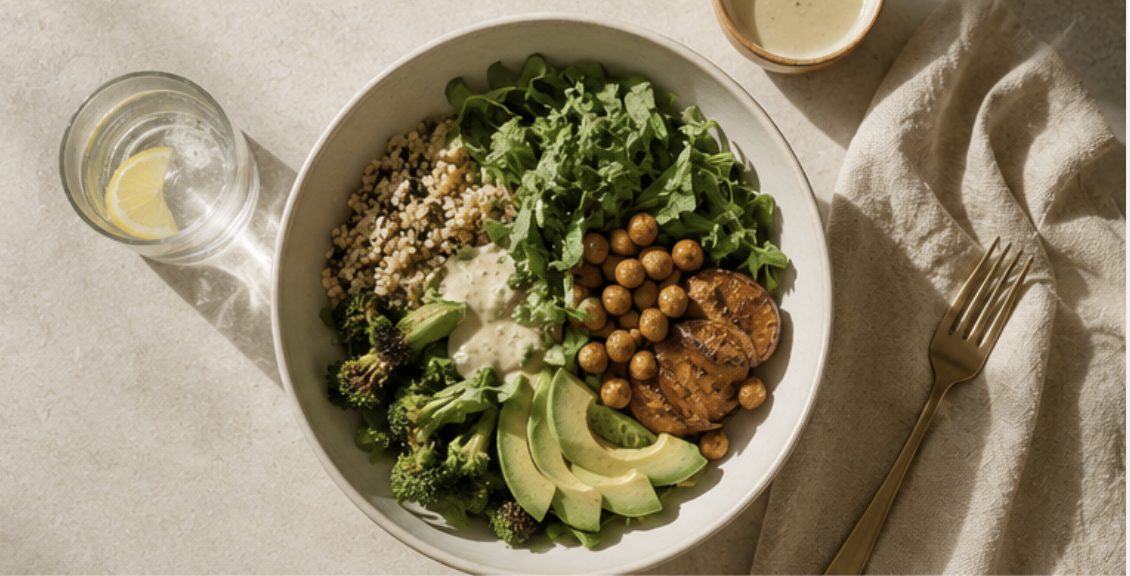
If the food side of this experiment interested you most, our deeper look at eating for calm and lower inflammation is a natural next read.
The Uncomfortable Question This Kind of Experiment Raises
Here's what a thirty-day wellness experiment like this doesn't fully capture: the placebo effect of paying attention to your health at all is enormous, regardless of which specific protocol you follow. Some meaningful percentage of "I felt better" in any wellness experiment isn't the protocol — it's the simple fact that for thirty days, someone was finally paying close, structured attention to their sleep, food, and movement, often for the first time in years. That attention alone moves the needle, expensive supplements or not.
This isn't a criticism of the experiment. It's a genuinely important thing to know before spending real money on a specific branded protocol, because it means you can likely get eighty percent of the benefit by simply committing, with real structure, to your own thirty-day version — magnesium from the pharmacy, a movement plan you actually enjoy, and sleep prioritized like it's a job, without buying a single branded product.
What the Wellness Industry Doesn't Want You Calculating
Do the actual math on a full Goop-style protocol over a year, and the number is startling — often several thousand dollars for supplements, skin protocols, and specialty foods that, ingredient for ingredient, largely overlap with a well-stocked pharmacy and grocery store. This is true across the wellness industry broadly, not specific to any one brand. The premium isn't buying better ingredients most of the time. It's buying the packaging, the aesthetic, and the story — all of which have real value to some people, but are worth naming honestly as separate from the physiological benefit.
"You are allowed to want the story and the packaging. Just know that's what you're buying, separate from what's actually in the bottle."
A More Provocative Take: Wellness Culture Has a Class Problem
It's worth naming directly that an enormous amount of aspirational wellness content implicitly assumes a level of disposable income, free time, and domestic support that most women simply don't have. Seed cycling, infrared saunas, $200 supplement stacks — these are real tools that can genuinely help, and they are also, for most households, simply not accessible, and treating them as the baseline for "taking your health seriously" quietly shames the women who are doing everything right with a fraction of the budget.
The actual, evidence-backed fundamentals — sleep, whole food, movement, sunlight, community — cost nothing and outperform almost everything in the premium tier. That's worth remembering every time a wellness brand implies otherwise.
Building Your Own Version for Under $50
Magnesium glycinate from any pharmacy. A daily walk instead of a specialty movement class. Bulk seeds from the grocery store instead of a branded seed-cycling kit. Water instead of a specialty hydration protocol. None of this is a downgrade. It's the same physiology, minus the story — and for most women, minus the story is exactly the right trade to make.
The Uncomfortable Middle Ground
It would be too simple to conclude that all premium wellness spending is wasted, and equally too simple to conclude none of it matters. The honest middle ground is this: the physiological mechanisms behind sleep, movement, and whole food are well-established and largely price-independent. The premium tier sells convenience, motivation, and community — a monthly box that shows up so you don't have to remember to buy magnesium yourself, a class schedule that creates accountability a solo walk doesn't. Those things have real value for some women's actual adherence, even if the underlying physiology was available for less.
A Question Worth Asking Before Your Next Wellness Purchase
Am I buying a mechanism, or am I buying a reminder to do something I already know works? If it's the latter, that's not a failure of willpower — reminders and structure have real value. It's simply worth knowing that you're paying primarily for the reminder, so you can decide honestly whether this specific reminder, at this specific price, is the most efficient way to get yourself to do the thing.
A Closing Word on Spending Your Wellness Budget Wisely
If you have real money to spend on your health, spend it where the evidence is strongest and the individual variation is lowest: sleep quality, a trainer who corrects your form, therapy if you need it, real food. Spend it last, if at all, on the categories with the weakest evidence and the highest markup — most supplements, most skincare devices, most detox anything. This ordering, unglamorous as it is, will do more for how you actually feel in a year than the reverse order that most wellness marketing quietly encourages.