Why Every Woman Over 30 Is Quietly Obsessed with Pilates Right Now
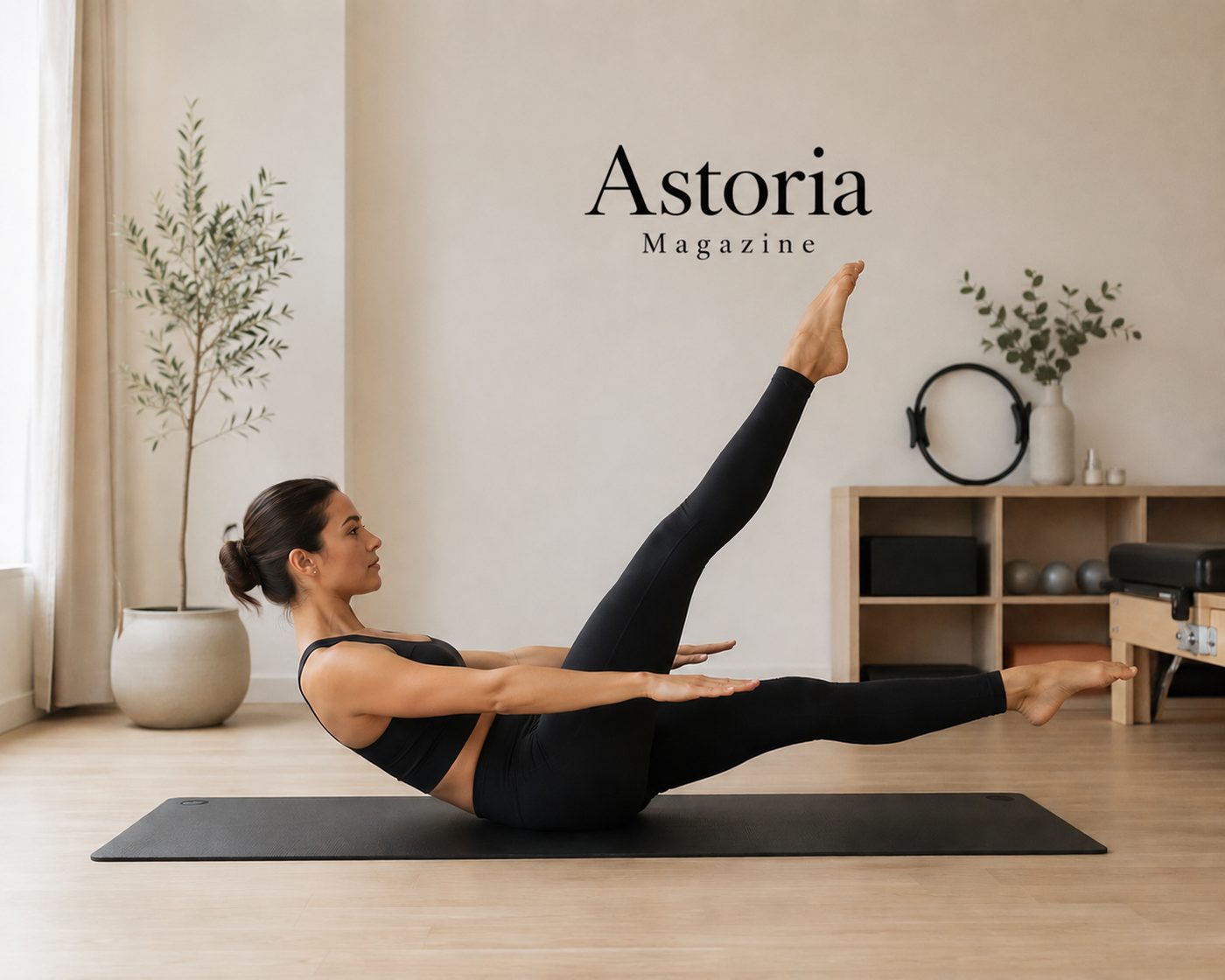
Let's skip past the part where we pretend Pilates is a new discovery. It's been around for a century. But something has shifted in the last few years — specifically among women in their thirties, forties, and fifties — and it's worth talking about honestly.
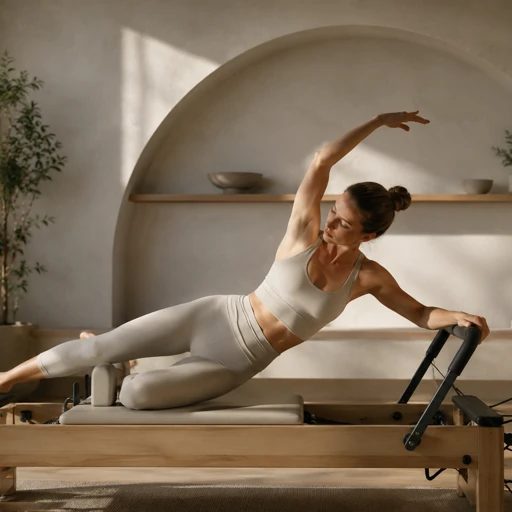
The women returning to Pilates right now aren't doing it for a smaller waist. They're doing it because something in their body finally demanded to be listened to. A bad back. Postpartum core weakness that never fully resolved. A growing awareness that the high-intensity workouts they used to love were leaving them depleted rather than energized. And they found that an hour on a reformer, moving slowly and with full attention, did something none of the other things had managed: it made them feel genuinely better.
What Pilates Actually Does That Other Workouts Don't
Pilates trains the muscles that most forms of exercise ignore. The deep stabilizers — the transverse abdominis, the multifidus, the pelvic floor — the system of small, interior muscles that literally hold your skeleton in place. When those are weak, everything compensates. Your lower back picks up the slack your core should be providing. You end up strong in some places and completely untrained in others, and eventually your body sends you a bill for that imbalance.
"Pilates isn't about burning calories. It's about rebuilding the architecture your body was always supposed to have."
The Mental Side Nobody Talks About Enough
There is something about the quality of attention that Pilates demands that is genuinely meditative. You cannot be on your phone. You cannot be half-present. Each movement requires enough focus that your mind, if you let it, goes quiet. For women whose days are spent in near-constant mental demand, that silence isn't a small thing. It's the whole thing.
How to Start Without Wasting Money on the Wrong Thing
Find a studio that offers small group reformer classes — ideally with six or fewer people — and commit to eight sessions before you judge it. The first two will feel confusing. The third will start to click. By the eighth, you'll understand why people talk about it the way they do. This is genuinely how it tends to go.
For many women, movement like this works best as part of a bigger daily rhythm — see our piece on building a morning ritual that actually sticks.
The Part of the Pilates Boom Nobody Wants to Say Out Loud
Here's an uncomfortable observation: a meaningful percentage of the current Pilates obsession has very little to do with core strength and a great deal to do with aesthetics — specifically, the promise of a lean, long, "Pilates body" that has become its own status symbol in certain circles. I don't think this makes the practice worthless. I think it makes it worth being honest about what's actually motivating the $40-a-class habit, because the motivation shapes whether you'll stick with it once the aesthetic promise inevitably plateaus.
The women who last with this practice for years are rarely the ones chasing a body. They're the ones who got hooked on how their back stopped hurting, how they could pick up their toddler without wincing, how their posture changed the way people responded to them in meetings. The aesthetic result, if it comes, comes as a byproduct of a body that finally works correctly — not the other way around.
Why Your Trainer Won't Tell You It's Not Enough on Its Own
Pilates studios have a strong financial incentive to position the practice as complete, and for most bodies, it isn't quite. It's extraordinary for the deep stabilizing muscles and for postural correction, and it is not, on its own, sufficient for bone density, which matters enormously for women heading toward and through menopause. Weight-bearing resistance work — actual heavy lifting, not just resistance springs — does something for bone density that low-load Pilates work doesn't fully replicate.
This isn't an argument against Pilates. It's an argument for pairing it with something it was never designed to do alone, and being suspicious of any single modality — Pilates included — marketed as the only thing you'll ever need.
"Any fitness practice marketed as the only thing your body will ever need is selling you a story, not a physiology."
What Eight Weeks Actually Looks Like, Honestly
Weeks one and two: confusion, mostly
You will not understand half the cues. "Scoop your abdominals" will mean nothing to your nervous system yet. This is normal and every single person who now swears by Pilates went through this exact same confused phase.
Weeks three through six: the click
Somewhere in this window, most women report a specific moment where a cue suddenly makes physical sense — where "reach through your heels" stops being an abstract instruction and becomes a felt sensation. This is the moment worth pushing through the confusing weeks to reach.
Weeks seven and eight: the results start showing up outside the studio
Better posture in the car. Less lower back tightness by the end of a workday. The ability to get off the floor without using your hands. These are the actual markers of progress — not a mirror, a scale, or a stranger's compliment.
A Reasonable Way to Think About Cost
Reformer studios are genuinely expensive, and there's no honest way around that. If the cost is prohibitive, mat-based Pilates — taught well, with real attention to form — delivers a meaningful percentage of the same benefit for a fraction of the price, especially in the first year while you're building basic body awareness. The reformer adds resistance variety that becomes more valuable once your fundamentals are solid, not before.
What Nobody Mentions About the First Six Months
There is a specific, under-discussed phase in the first six months of consistent Pilates practice where soreness increases before it decreases, as previously dormant stabilizing muscles get recruited for the first time in years, sometimes decades. Women often interpret this as a sign something is wrong, or that their body is responding poorly, when it's actually the clearest possible sign the practice is working exactly as intended. The muscles doing the complaining are the muscles that were compensating for years, finally being asked to do less while the correct muscles take over the load.
A Reflection on What You're Actually Training For
It's worth asking honestly, before committing real money to a reformer membership: what specifically am I hoping this changes about my daily life, beyond appearance? For some women it's the ability to play on the floor with grandchildren without wincing. For others it's simply moving through a day without the low background hum of back pain that's become so familiar it stopped registering as a problem. Naming the real, functional goal — not the aesthetic one — tends to produce far more consistent practice over the years that actually matter for bone and joint health.
A Closing Word on Patience With Your Own Body
The body you have today has been compensating for years, possibly decades, and it will not fully recalibrate in a single eight-week series, however good the studio or however committed you are. Real, structural change to how your body distributes load takes closer to a year of consistent practice than a summer. This is not the message most fitness marketing wants you to hear, because a year-long commitment is a harder sell than a six-week transformation promise.
It's true anyway. Give it the year. The women who do rarely regret the time, and the ones who quit at week six because the mirror hadn't changed enough almost always wish, later, that they'd kept going.