Nobody Told Me My Diet Was Aging Me Faster Than It Should
What the science actually says — and what it doesn't — about food, inflammation, and feeling like yourself through your forties and beyond.
There is a particular kind of tired that seems to arrive, uninvited, somewhere in your forties. The afternoon slump that coffee no longer fixes. Sleep that feels lighter than it used to. A mood that dips for reasons you can't quite name. It's tempting to file all of it under "getting older" and leave it there. But a growing body of research suggests that some of what we experience as aging is really something quieter underneath: chronic, low-grade inflammation.
A Small Fire That Never Quite Goes Out
Inflammation itself isn't the enemy. In its acute form, it's one of the body's great repair systems — the swelling around a sprained ankle, the heat of a healing cut. The trouble begins when that response never fully switches off. Scientists have a name for the slow, simmering inflammation that tends to accumulate with age: inflammaging. It produces no obvious symptoms for years, yet over time it is thought to accelerate the aging process and raise the risk of many of the conditions we most want to avoid later in life — heart disease, type 2 diabetes, and the gradual loss of muscle and resilience.
The encouraging part is how responsive it is to everyday choices. Researchers have repeatedly found that the way we eat — sustained over years, not weeks — can measurably temper this kind of inflammation and support a healthier path through aging.
Where Food Meets Hormones
This is where the conversation usually takes a wrong turn. You've seen the headlines promising to "balance your hormones" with a particular smoothie or a list of forbidden foods. It's worth saying plainly: food does not flip your hormones into perfect order, and any plan that promises it is overselling. What the evidence actually supports is gentler and, in its way, more useful — that an anti-inflammatory way of eating supports the systems your hormones depend on.
Consider blood sugar. When meals are built largely from refined carbohydrates and sugar, blood sugar rises and falls sharply, and over time the body can become less responsive to insulin — a state linked to both chronic inflammation and that all-too-familiar energy crash. Stress hormones play a part too: cortisol, designed to raise blood sugar for a quick burst of fuel, keeps the body in a more insulin-resistant state when it stays elevated for too long. None of this is about a single food or a single hormone. It's about steadiness — eating in a way that asks less of these systems, day after day.
The Perimenopause Piece
For women moving through perimenopause and menopause, there's a more specific reason to pay attention. Several studies have found that women who eat in a Mediterranean style — the most well-studied anti-inflammatory pattern — report less severe menopausal symptoms, including fewer disruptive hot flashes. Researchers think part of the reason is that this way of eating lowers inflammation and oxidative stress, both of which have been tied to the intensity of menopausal symptoms.
It's worth holding this loosely. The evidence is encouraging but not yet settled; scientists themselves describe it as promising but inconsistent, and they're careful not to write firm prescriptions from it. Think of it less as a treatment and more as tilting the odds gently in your favor.
"Add a little more of the good before you subtract. Done quietly and consistently, that is very nearly the whole of it."
What It Feels Like, Day to Day
Set aside the biology for a moment, because the reasons most women stay with this way of eating aren't found in a lab. They're the steadier afternoon energy. The sleep that feels a little deeper. The sense that your mood has fewer cliffs in it. These are not miracles, and they don't arrive overnight. But they are real, and they tend to compound.
What to Actually Eat (and What to Ease Up On)
None of this requires a rulebook. The pattern the major medical centers point to again and again is simple and, happily, generous.
Eat more of
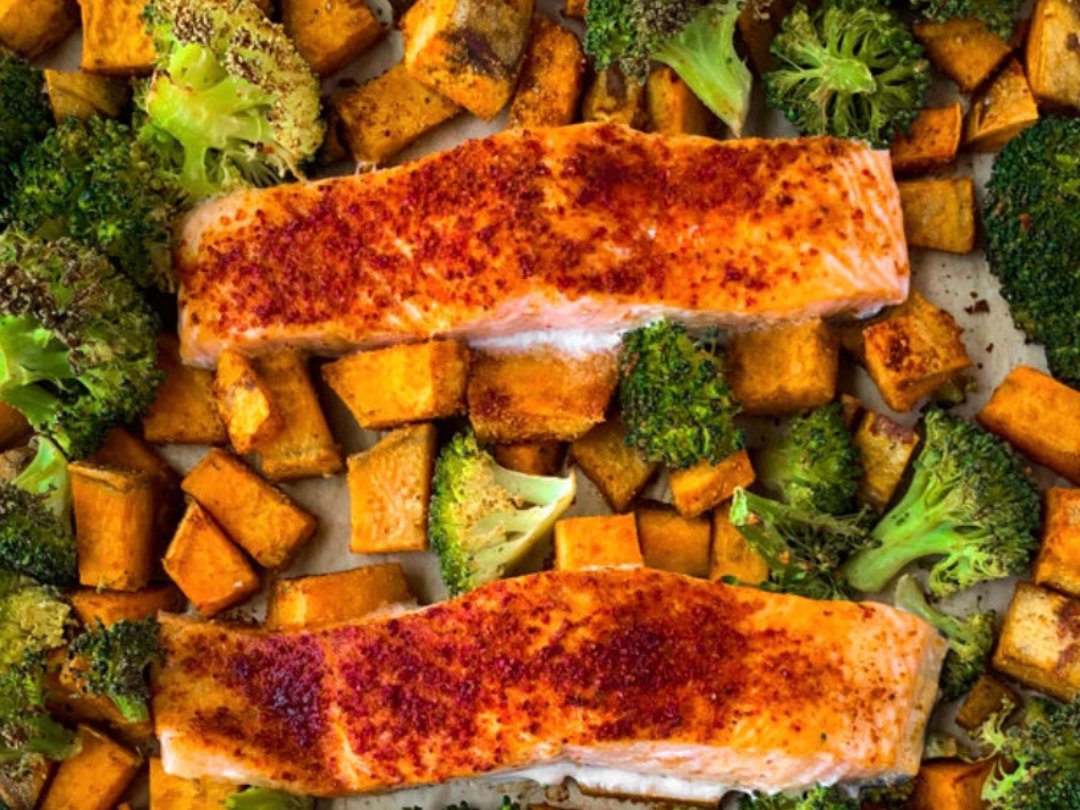
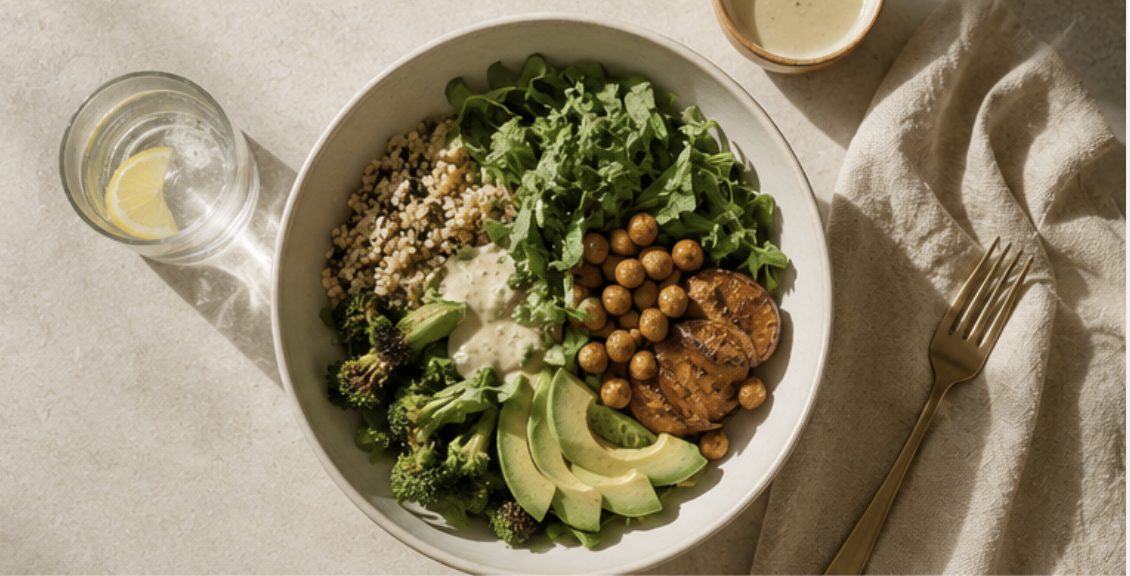
Vegetables and leafy greens, berries and whole fruit, beans and lentils, nuts and seeds, fatty fish like salmon, olive oil, whole grains, and herbs and spices — colorful, plant-forward, and largely unprocessed.
Ease up on
Sugary drinks and sweets, refined white carbohydrates, fried foods, and heavily processed, packaged foods, which tend to push inflammation in the wrong direction.
If you'd rather not think in lists at all, there's a shortcut: the Mediterranean diet is essentially the anti-inflammatory pattern with a name attached, and it's the one with the deepest research behind it.
The Astoria Way to Do This — Gently
We'd steer you away from the all-or-nothing approach that wellness culture loves and that almost no one sustains. You don't have to overhaul your kitchen on a Sunday or swear off the foods you love. The research that matters is about the everyday pattern, not the occasional pleasure. Add a little more of the good before you subtract — another vegetable, a handful of walnuts, fish twice a week, olive oil where the butter used to go. Done quietly and consistently, that is very nearly the whole of it.
A note: This article is for general information and isn't medical advice or a substitute for the doctor who knows your history. If your energy, sleep, or mood have changed in ways that worry you, start there — food is a companion to good care, not a replacement for it.
Food is only half of feeling better in your body — pair it with movement, starting with why Pilates has become the movement of choice for women over 30.
The Marketing Problem With "Anti-Inflammatory" as a Label
Here's an uncomfortable truth about the phrase "anti-inflammatory diet": it has been stretched by marketing to the point of near meaninglessness, slapped on everything from $12 juices to supplement stacks with no real evidence behind them. This doesn't mean the underlying science is fake — chronic inflammation is a real, well-documented driver of disease risk. It means the label itself has become a marketing shortcut that lets companies charge a premium for foods that were already healthy under their plain, boring names.
A head of broccoli doesn't need an "anti-inflammatory" sticker to be good for you. The moment a product needs that language to justify its price, that's worth treating as a signal to look more closely, not less.
Why This Matters More in Your Late Thirties Than Your Twenties
The uncomfortable reality of female physiology is that the inflammatory load your body can absorb without consequence changes as estrogen begins its slow decline in perimenopause, often starting years before most women expect it. The pizza-and-wine routine that caused zero visible issues at twenty-six can quietly compound into joint pain, sleep disruption, and mood instability by thirty-eight — not because you did anything wrong, but because the hormonal buffer that used to absorb dietary inflammation is thinning. This is exactly why this conversation lands differently, and matters more urgently, for women in this specific stage of life than it did a decade earlier.
"Your body didn't get more fragile. Your hormonal buffer just got thinner, and the same habits that used to be invisible started showing up on the bill."
The Uncomfortable Category Nobody Wants to Talk About: Alcohol
Most anti-inflammatory content conveniently sidesteps alcohol, likely because it's socially and emotionally complicated to address directly. But the evidence here is not ambiguous: alcohol is one of the more reliably inflammatory substances most women consume regularly, and its effects compound with age in ways they didn't in your twenties. This isn't a call to abstain entirely — it's a request to stop pretending it's neutral in a conversation explicitly about inflammation, when it demonstrably isn't.
A Two-Week Honest Experiment
What to actually track
Not weight. Track sleep quality, joint stiffness on waking, and afternoon energy — three markers that respond to inflammation faster and more honestly than the scale ever will.
What to change, and nothing more
Add fish twice. Add a vegetable to every dinner. Cut one thing — not everything, one thing, whichever feels most honest to name as your actual problem area. Two weeks is enough to notice a real shift if the underlying theory has anything to it for your specific body.
What to do with the results
If nothing changes, that's useful information too — it may mean your inflammation driver is elsewhere entirely: stress, sleep, or something worth a real conversation with a doctor rather than another dietary tweak.
What Happens When You Actually Ask a Doctor, Not a Wellness Influencer
Physicians who study inflammation for a living tend to be far more measured than wellness content suggests, largely because the research, while real, is genuinely more modest and more individual than the confident claims in most anti-inflammatory content imply. The honest answer from most rheumatologists and endocrinologists is some version of: diet is a real, meaningful lever, it is not the only lever, and it works differently for different bodies depending on genetics, existing conditions, and gut microbiome composition that no generic diet plan accounts for.
This uncertainty is less satisfying than a confident protocol promising specific results. It's also more honest, and it's worth sitting with the discomfort of "this probably helps, to a degree that varies by person" rather than reaching for a more confident claim that the actual science doesn't fully support.
A Reflection Before You Overhaul Your Diet
What specific symptom are you actually trying to address, and how will you know if this is working? Vague goals like "feel better" are nearly impossible to evaluate honestly. A specific goal — fewer afternoon energy crashes, less joint stiffness on waking — gives you something concrete to track, and permission to adjust course if two months of genuine effort produces no measurable change in that specific marker.
A Closing Word on Sustainable Change
The women who see real, lasting benefit from anti-inflammatory eating are almost never the ones who overhauled everything in a single dramatic week. They're the ones who made one or two changes, let them become boring and automatic, and then added one more. This is a slower process than any before-and-after post suggests, and it happens to be the only version that actually lasts once the initial motivation of a health scare or a hard year fades, as motivation always eventually does.