Nobody Wants to Say This About Beauty Routines Anymore, So We Will
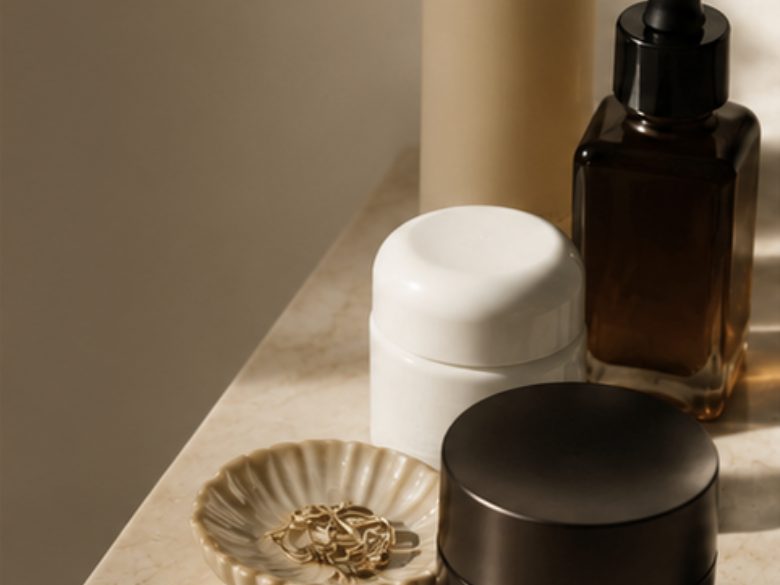
Somewhere in the last five years, skincare stopped being about skin and became something closer to a compulsion dressed up as self-care. The fourteen-step routines. The serums layered on serums. The ring lights and the flat-lay photos of forty products arranged like an altar. And I want to say something that feels almost forbidden to say out loud in most rooms full of women right now: I think a meaningful portion of this has very little to do with actual skin health, and a great deal to do with anxiety that has found a socially acceptable place to live.
This is not an argument against skincare, or against caring about how you look, or against spending money on things that make you feel good. It's an argument against mistaking accumulation for care, and against the quiet, creeping belief that more products equal more worth.
The Beauty Industry Discovered Something Powerful: Uncertainty Sells
Here is the business model, stated plainly. A serum that solves a problem you didn't know you had creates a customer for life, because the problem never actually resolves — it just gets managed, indefinitely, at $68 a bottle. The entire architecture of the modern skincare industry depends on a woman never quite feeling finished. Not glowing enough. Not hydrated enough. Not "barrier repaired" enough. There is always a next step, a new ingredient, a serum you didn't know you were missing.
I don't think this is a conspiracy exactly. I think it's simply what happens when an industry built on selling hope discovers that uncertainty is a far more renewable resource than satisfaction.
"A woman who feels finished doesn't need to buy anything else. The entire industry depends on you never quite arriving."
What Actually Works Is Almost Insultingly Simple
Dermatologists will tell you, if you ask them plainly and they're being honest rather than sponsored, that the list of ingredients with strong evidence behind them is short. Sunscreen. A retinoid. Something to gently exfoliate. A moisturizer suited to your skin type. That's most of it. Everything else is, at best, a marginal improvement dressed up as a revolution, and at worst, actively irritating skin that would have been fine left alone.
Sunscreen, daily, without exception
This is the single highest-leverage thing in the entire category, and it's also the least glamorous, which tells you almost everything you need to know about why the industry doesn't lead with it.
One active ingredient, used consistently
A retinoid or a vitamin C, chosen deliberately and used for months rather than days, will do more for your skin than seven different actives rotated in a routine so complex you can't remember what you applied yesterday.
Sleep, water, and the boring basics
No serum outperforms seven hours of sleep. This is not a controversial scientific claim; it's simply an inconvenient one, because sleep can't be sold in a jar.
The Deeper Question: What Are We Actually Trying to Fix?
I want to gently suggest that the real product being sold isn't skincare at all. It's the promise of control in a body that, like every body, is aging in ways no serum can fully arrest. There is something almost tender about how much energy goes into this pursuit — the hope that if we just find the right combination, we can hold something still that was never going to hold still.
And I think a faith-rooted way of living pushes back gently against this particular anxiety, not by dismissing beauty as unimportant, but by placing it in its proper, smaller size. Your face at fifty is not a failure to be corrected. It is evidence of a life lived, and there is a version of aging that looks less like a battle and more like an inheritance you're allowed to wear without apology.
"Aging gracefully was never about doing nothing. It was about no longer needing to do everything."
Toward a Beauty Practice That Isn't Anxiety in Disguise
Ask what you'd do if no one could see the results
This single question filters out an enormous amount of noise. If a step in your routine only matters because of how it photographs, or because of what it signals to other people, it's worth asking honestly whether it's serving you or serving an image of you.
Choose discipline over accumulation
A five-product routine, done consistently for a year, will outperform a twenty-product routine abandoned every six weeks when the next trend arrives. Discipline is unglamorous. It's also the only thing that has ever actually worked, in skincare or almost anywhere else.
Let some things simply be what they are
Not every line needs softening. Not every shadow needs correcting. There is a kind of peace available to women who decide, on purpose, that their face is allowed to tell the truth about their life without a full-time campaign to edit that truth.
A Provocation, Gently Offered
I suspect some readers will hear all of this as an argument against caring about how you look, and I want to close by saying clearly that it isn't. Beauty, pursued with a light hand and genuine enjoyment, is one of the real pleasures available to us. A great lipstick can change a Tuesday. A good haircut can change a year. None of that is in question.
What I'm questioning is the version of beauty maintenance that has quietly become indistinguishable from anxiety management — the routines performed less out of enjoyment and more out of a low-grade fear of falling behind some invisible standard that keeps moving by design. That version isn't self-care. It's a very well-marketed treadmill, and you're allowed to step off it.
The women I know who seem the most at peace in their own skin, quite literally, are rarely the ones with the most elaborate routines. They're the ones who found their five things, did them well, and then went back to living the rest of their lives — the parts that were never about their pores in the first place.
The Economics of an Industry Built on Never Finishing
Consider the numbers for a moment, because they tell a story more honest than any marketing copy. The global skincare industry is worth hundreds of billions of dollars and growing every year, in a world where the actual, evidence-backed list of things that meaningfully affect skin health has barely changed in decades. That gap — between an ever-expanding industry and a stubbornly small list of things that actually work — has to be explained by something, and the honest explanation is that the industry has gotten extraordinarily good at manufacturing new problems for existing solutions to solve.
"Barrier repair" wasn't a phrase most women used five years ago. Neither was "skin cycling," or a dozen other terms that emerged not because dermatological science made a sudden leap forward, but because a new vocabulary was needed to make you feel like your existing routine was suddenly, quietly insufficient.
What Dermatologists Actually Say Behind Closed Doors
Ask a dermatologist off the record, in a context where they're not being filmed for a sponsored post, what they'd tell their own daughter to do, and the answer is almost always shorter than you'd expect. Sunscreen. A retinoid, introduced slowly. Gentle cleansing, not stripping. Moisturizer suited to your actual skin, not the skin you're told you should have. And then, often, a pause, followed by some version of: "Everything else is optional, and a lot of it is marketing."
This isn't a controversial or fringe opinion within dermatology. It's close to consensus. What's controversial is saying it out loud in an industry where the business model depends on the opposite message.
"If a fourteen-step routine actually worked better than a four-step one, dermatologists would prescribe fourteen steps. They don't, because it doesn't."
The Psychology of the Empty Jar
There's a specific feeling worth naming here: the small dopamine hit of finishing a product and starting a new one. Skincare taps into something almost identical to the mechanics of a slot machine — the possibility that this next bottle, this next serum, might be the one that finally, permanently fixes the thing you've been trying to fix. It rarely is. But the hope itself is the product being sold, refreshed and repackaged every time a new ingredient trends.
Recognizing this pattern doesn't require cynicism about the whole category. It just requires an honest accounting of which purchases are driven by genuine need and which are driven by the pleasant anticipation of maybe, finally, this time, arriving somewhere you've already, quietly, arrived.
What Rest Does That No Serum Can
If there's one intervention that outperforms almost everything sold in a bottle, it's sleep, and it's worth taking seriously precisely because it's so unglamorous. Chronic sleep deprivation shows up on the face in ways no amount of concealer fully corrects — in inflammation, in dullness, in the kind of tiredness that reads through makeup rather than under it. A woman who sleeps seven to eight hours consistently, drinks water, and manages her stress will often look better, with almost no products at all, than a woman running on five hours of sleep and twelve steps of skincare.
This isn't a moralizing point about discipline. It's simply an accurate description of where the actual leverage sits, and it's worth knowing so you can spend your energy — and your money — where it will genuinely pay off.
A Different Kind of Beauty Practice
Simplify first, then indulge selectively
Get the boring basics locked in — sunscreen, one active, sleep, hydration — before adding anything for pleasure. Once the fundamentals are handled, there's nothing wrong with a beautiful lipstick or an indulgent face oil purely because it delights you. The order matters: foundation first, indulgence second, never the other way around.
Ask what you're actually trying to buy
Before a purchase, it's worth asking honestly: am I trying to solve a skin problem, or am I trying to buy a feeling — control, hope, belonging to whatever trend is currently circulating? Both are valid reasons to spend money, but they deserve to be named honestly rather than disguised as skincare science.
Let your face age like the rest of you is allowed to
There's a quiet dignity available to women who stop treating each new line or gray hair as an emergency requiring correction, and start treating it as simply what a life well-lived looks like on a body. This isn't giving up. It's arriving somewhere calmer than the treadmill most of us were never told we could step off of.
Closing Thought
None of this is an argument for neglect, or for pretending appearance doesn't matter. It's an argument for proportion — for a beauty practice sized correctly to its actual importance in a full life, rather than one that quietly expands to fill every anxious corner available to it. The goal was never an empty routine. It was a full life, with a much smaller, much calmer relationship to the mirror than most of us have been sold.
Talking to Your Daughter About All of This
If you're raising a daughter in this era, the skincare conversation is arriving earlier than most of us expected — sometimes as early as nine or ten, driven by videos she's watching that were never intended for her. The most useful thing you can offer her isn't a rule about which products she's allowed to use. It's a demonstration, watched over years, of a mother who has a calm, unbothered relationship with her own face — who isn't performing an elaborate ritual out of fear, and who models what it looks like to care for yourself without being consumed by the project of yourself.
Children learn far more from what they watch us do than from what we tell them to do. A daughter who grows up watching her mother's simple, steady five minutes at the sink — rather than an anxious, ever-expanding routine — is being taught something far more valuable than any single product ever could.