I Moved My Family Across the Country for “Better Schools.” Was It Worth It?
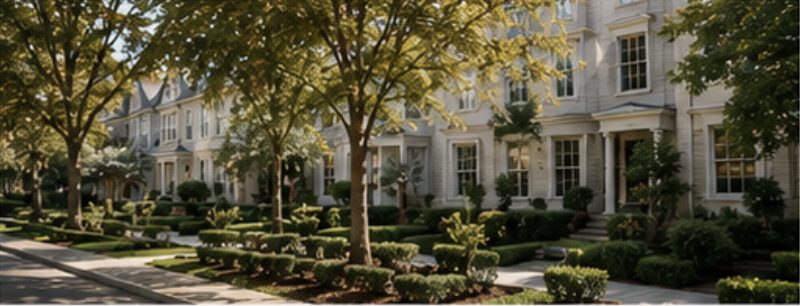
The post-pandemic migration has settled into something more deliberate. The chaotic "I'll move anywhere with good WiFi" energy of 2020 has given way to a more considered question: Where do I actually want to build my life? And for a specific category of buyer — educated, values-driven, often with children or planning for them, looking for community as much as real estate — the answers are clustering around a set of markets that share some interesting characteristics.
What "The Right Neighborhood" Actually Means in 2025
These buyers are optimizing for something that doesn't show up easily in Zillow filters. They want walkability, but a specific kind. They want excellent public schools but also a school culture that aligns with their values. They want neighbors who are, in some loose sense, like them — communities with a mix of young families, strong faith communities, and a social fabric dense enough to feel like home.
The Markets Worth Watching
Charleston, South Carolina
The draw: a genuine sense of community, excellent private school options, a strong faith presence, and a quality of life that is difficult to replicate at any price point in a major coastal city. Inventory remains tight in the most desirable neighborhoods, but the fundamental appeal isn't going anywhere.
Brentwood and Franklin, Tennessee
The Nashville suburbs have absorbed an enormous amount of migration from California, the Northeast, and the Midwest. The school system is exceptional. The church community is deep and genuine rather than performative. Prices have risen substantially, but the fundamentals support continued demand.
Colorado Springs, Colorado
What's drawing family buyers specifically is a community infrastructure that is unusually strong: the faith community, the network of private and charter schools, the sense that neighbors know each other. For buyers priced out of Denver proper, it offers a quality of life that is genuinely competitive.
"The women driving the smartest relocation decisions right now aren't just buying a house. They're buying into a community. The real estate is almost secondary."
What to Look for That the Listings Won't Tell You
Before you make an offer, spend a Sunday in the neighborhood. Go to a coffee shop and notice who's there. Attend a service at a local church if faith community matters to you. Walk to the nearest park at a time when families would reasonably be there. Talk to people. You will learn more in three hours of this than in three weeks of Zillow browsing.
Once you've found the right neighborhood, the next question is what you actually build inside it — our piece on the new quiet luxury home picks up right where this leaves off.
The Uncomfortable Truth About What "Good Schools" Actually Signals
When buyers say they're moving for "good schools," the conversation rarely goes further, but it probably should. School ratings correlate extremely strongly with the income and education level of the surrounding families, which means "good schools" is frequently doing a lot of quiet, unspoken work as a proxy for a specific kind of homogeneity — economic, and often racial and religious as well. This is worth naming honestly rather than dancing around, because the neighborhoods this piece describes are, whether intentionally or not, sorting along more axes than test scores alone.
None of this means the desire for strong schools and safe, cohesive communities is illegitimate. It means the conversation is more complicated than "good schools," and buyers who examine what they're actually optimizing for tend to make decisions with fewer regrets five years in.
The Provocative Part: Community Can Become an Echo Chamber
The same density of like-minded neighbors that makes a community feel warm and supportive can also, without anyone intending it, narrow the range of ideas, backgrounds, and life experiences a family is regularly exposed to. Children raised in a highly homogeneous community — even a warm, values-aligned, faith-centered one — may reach adulthood with a narrower frame of reference than their parents intended, simply because difference was rarely encountered up close. This is worth weighing honestly against the very real benefits of that same cohesion, rather than assuming the tradeoff doesn't exist.
"The same density of like-minded neighbors that feels like belonging can also, unintentionally, become a filter on how wide the world gets to look from inside it."
What the Listing Photos Never Show
The actual commute, at the actual time you'd make it
Zillow's ten-minute commute estimate rarely accounts for the specific 7:45am bottleneck that adds twenty-five minutes, every single day, for years. Drive it yourself, at the real time, before you commit.
The five-year development pipeline
Every town has a planning department with public records of what's approved and pending — a new highway exit, a large multi-family development, a shopping center. This information is public, rarely reviewed by buyers, and can dramatically change a neighborhood's character within the exact timeframe you're planning to live there.
What the neighborhood is like in the season you're not viewing it in
A neighborhood shown in perfect May light is not the same neighborhood in February slush or August humidity. Ask specifically what the area is like in its worst season, not just its best one.
A Question Worth Asking Before You Sign
Beyond schools and safety: who is this neighborhood actually for, five years from now, and will your family still fit that description? Neighborhoods shift. The community that welcomes a family with toddlers may look different by the time those children are teenagers. Buying for who you are today, without asking who the neighborhood will be shaped around next, is one of the more common blind spots in an otherwise careful decision.
What Urban Planners Know That Buyers Rarely Ask About
Municipal planning departments maintain detailed, publicly accessible records of zoning changes, infrastructure projects, and development approvals years before they become visible on the ground. Almost no buyers consult these records before purchasing, despite them being free and public, which means most families learn about a coming four-lane road expansion or large multi-family development only after moving in, when it's considerably harder to course-correct.
A Reflection Before You Commit to a Specific Zip Code
Beyond schools and safety, it's worth asking honestly: am I buying into this specific community because it genuinely fits our family's actual values, or because it fits the values I feel I'm supposed to have at this stage of life? The pressure to choose a specific kind of neighborhood, at a specific life stage, is real and rarely examined directly. Naming that pressure honestly, before signing anything, tends to produce a decision with far fewer regrets five years in.
A Closing Word on Buying for the Decade Ahead
The smartest real estate decisions in this category are rarely the ones optimized perfectly for right now. They're the ones that hold up reasonably well across a ten-year window of a family's actual, unpredictable evolution — more kids or fewer, a job change, aging parents moving in. Buying with that longer, blurrier horizon in mind, rather than perfectly optimizing for this exact moment, tends to produce far fewer expensive corrections later.