I Stopped Posting My Kids on Social Media and It Changed My Relationship With Motherhood Itself
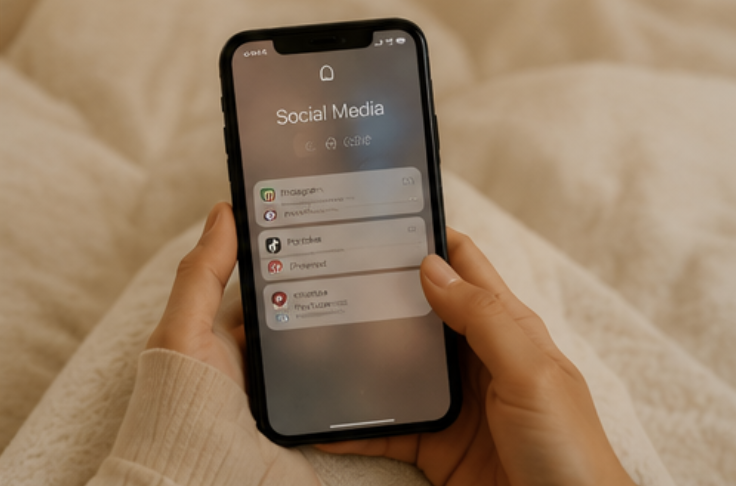
Three years ago, I quietly stopped posting photos and stories about my children online. I didn't announce it or make it a moral stance in front of other parents who were still posting freely. I simply stopped, largely out of a growing discomfort with how much of their childhood had become, without their consent, publicly documented content. What I didn't expect was how much the decision would change my actual, lived experience of being their mother, separate from any privacy concern entirely.
The Discomfort I Couldn't Quite Name at First
The initial impulse wasn't primarily about safety, though that concern existed too. It was something harder to articulate: a growing unease about the fact that I had been narrating my children's most vulnerable, funny, embarrassing, and tender moments to an audience of hundreds of people who were not actually present for their lives, while a part of my own attention, in the moment itself, was quietly composing the caption rather than fully inhabiting the experience with them.
The Uncomfortable Thing I Noticed About My Own Attention
Once I started paying attention to this pattern, I noticed it everywhere. My daughter would do something funny or sweet, and a part of my brain would immediately start drafting how to describe it online, even as the moment was still happening in front of me. I was, in a very real sense, partially absent from my own children's childhood, present enough to document it but split enough that I wasn't always fully there for it, because some percentage of my attention was reserved for an audience that wasn't in the room.
"I had been mothering with one eye on my children and one eye on how the moment would read online. I didn't realize how much that second eye was costing me until I finally closed it."
What Actually Changed Once I Stopped
I stopped narrating in real time
Without an audience to compose for, I noticed within weeks that the internal narration during ordinary moments with my kids had quieted considerably. I was simply there, watching my son build something elaborate out of blocks, without a portion of my mind drafting a caption about how clever he was.
I stopped comparing our family's highlight reel to everyone else's
Posting less also meant scrolling less, and scrolling less meant I stopped constantly measuring my own parenting against a stream of other families' curated best moments, a comparison that had been quietly eroding my confidence for years without my fully registering it.
My kids started asking fewer performance-adjacent questions
My daughter, who used to occasionally ask if a moment was "going on the story," entirely stopped asking that question within about six months. I hadn't realized how much she'd absorbed the idea that some moments existed partly to be documented until I watched that framework quietly disappear from her own vocabulary.
What Researchers Are Starting to Say About "Sharenting"
Researchers who study the effects of parents documenting children's lives online — a practice now commonly called "sharenting" — have begun raising concerns that go beyond the obvious privacy and safety questions. Some of the emerging research suggests that children who grow up heavily documented online develop an early, sometimes uncomfortable awareness of being watched and evaluated, which can shape their sense of self in ways still being studied. Separately, and perhaps more relevant to my own experience, there's a growing body of thought suggesting that the parent's own experience of presence and attention is measurably affected by the habit of mentally curating a child's life for an audience, even when the actual posting is infrequent. The habit of mind, not just the act of posting, appears to be the more significant variable.
A Provocative Thought About Whose Story This Actually Is
I've come to believe that a child's early years are not actually content, even when they make wonderful content, and that there's a meaningful difference between documenting a life for the family's own private memory and performing that life for an ongoing public audience. My children did not consent to having their most vulnerable and funny moments narrated to strangers, and at some point I had to admit that continuing to do so was serving something in me — validation, connection, the dopamine of engagement — more than it was serving them.
What I Do Instead Now
I still take just as many photos, arguably more, since I'm not filtering for what will read well publicly. They live in a private album I share directly with grandparents and close friends, the people who are actually in our lives rather than an algorithmically assembled audience. The photography itself didn't stop. Only the performance of it did.
What I'd Say to a Mother Considering the Same Shift
You don't need a dramatic announcement or a moral stance against anyone still posting freely, which is a personal choice I'm not interested in litigating for other families. What I'd suggest is simply noticing, for one week, how many moments with your children you experience with part of your attention already composing a caption. If that number surprises you the way it surprised me, the shift might be worth trying, not for your children's privacy alone, but for your own experience of actually being there.
A Closing Word
Three years later, I don't think about my children's childhood in terms of what would have made a good post. I think about it in terms of what actually happened, fully witnessed, without a second, quieter audience competing for my attention in the room. That shift, more than any privacy concern, turned out to be the actual gift I gave myself, disguised as something I thought I was doing for them.